Pearson Edexcel · GCSE · English Literature
Poetry Anthology: Relationships (15 poems – Romantic, Literary Heritage, Contemporary)
Master the Edexcel GCSE Relationships Poetry Anthology with this comprehensive guide. Explore 15 poems spanning centuries, decoding the complex language of love, loss, power, and memory to secure top marks in your comparison essays.
- 5 min read
- 1 worked example
- 1 practice question
- 3 key terms
Study Notes
Overview
The Edexcel GCSE English Literature 'Relationships' anthology (Collection 1) brings together 15 poems that explore the intricate, often messy realities of human connection. Spanning the Romantic era, Literary Heritage, and Contemporary periods, these poems deal with romantic love, familial bonds, grief, and the destructive nature of power. Examiners are looking for your ability to perceptively compare how poets use language, form, and structure (AO2) to present these themes, while seamlessly integrating relevant contextual factors (AO3) that influenced the writers.
The Podcast Guide
Listen to our comprehensive 10-minute audio guide covering key themes, methods, and exam technique:

Key Themes
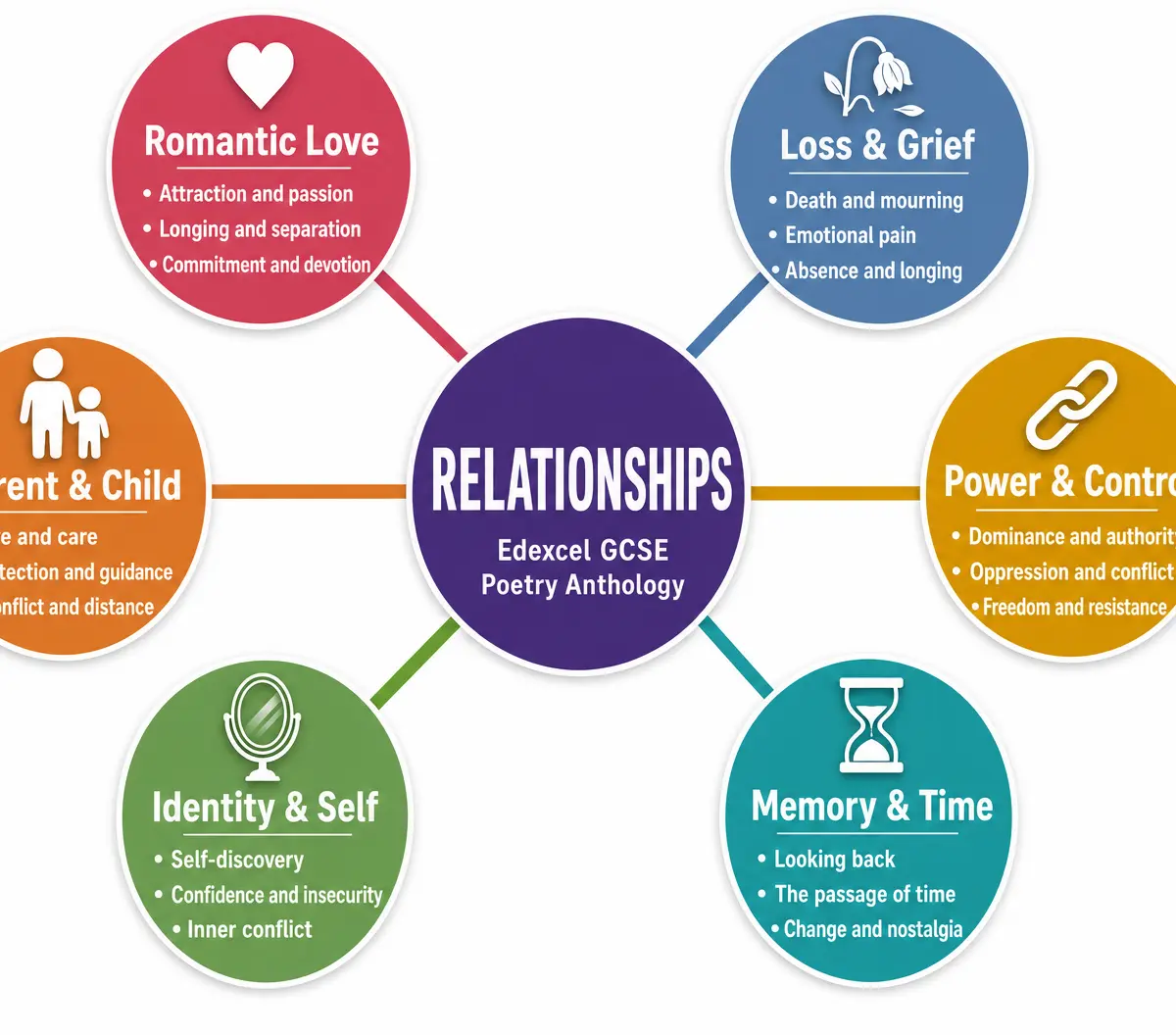
Theme 1: Romantic Love & Passion
Romantic love is explored through various lenses, from intense devotion to painful longing. The poets often use natural imagery to express the overwhelming power of their feelings.
Key Quotes:
- "How do I love thee? Let me count the ways." (Sonnet 43, Elizabeth Barrett Browning) - The use of the rhetorical question and the verb "count" creates a tension between rational measurement and spiritual devotion.
- "I think of thee!—my thoughts do twine and bud / About thee, as wild vines, about a tree" (Sonnet 29, Elizabeth Barrett Browning) - The extended metaphor of the vine shows how her thoughts of her lover are organic, growing, but potentially suffocating.
Theme 2: Loss, Grief & Separation
The pain of separation, whether through death, distance, or the end of a relationship, is a recurring motif. Poets use structural disruption to mirror emotional turmoil.
Key Quotes:
- "In silence and tears" (When We Two Parted, Lord Byron) - The cyclical structure of the poem, beginning and ending with this phrase, traps the speaker in a state of perpetual mourning.
- "Better by far you should forget and smile / Than that you should remember and be sad." (Remember, Christina Rossetti) - The volta marks a shift from selfish demand to selfless love, highlighting the complex nature of grief.
Theme 3: Power & Control
Several poems examine the darker side of relationships, where one person exerts dominance over another. These poems often use dramatic monologue to reveal the psychological flaws of the speaker.
Key Quotes:
- "I gave commands; / Then all smiles stopped together." (My Last Duchess, Robert Browning) - The chilling euphemism and the use of the caesura highlight the Duke's absolute, ruthless control over his wife's life.
- "We stood by a pond that winter day" (Neutral Tones, Thomas Hardy) - The bleak, colourless setting reflects the emotional death of the relationship, suggesting a loss of power to change the outcome.
Writer's Methods (AO2)
Examiners heavily reward the analysis of how meaning is constructed.
Form
- Dramatic Monologue: Used powerfully in My Last Duchess to reveal the speaker's arrogance and control. We only hear the Duke's voice, forcing us to read between the lines.
- The Sonnet: Traditionally associated with love, used by Elizabeth Barrett Browning to express intense devotion, but often subverted by other poets to explore the limitations of love.
Structure
- Volta (Turning Point): Look for the shift in tone or argument, such as in Rossetti's Remember, where the speaker's attitude towards memory changes.
- Enjambment: Lines running over without punctuation can suggest a flow of emotion, or, in the case of the Duke in My Last Duchess, an unstoppable, controlling voice.
Language & Imagery
- Extended Metaphors: Comparing love to a growing vine (Sonnet 29) or a drying fountain (A Complaint) provides a sustained image for analysis.
- Semantic Fields: Groups of related words. For example, the semantic field of death and winter in Neutral Tones creates a pervasive sense of hopelessness.
Context (AO3)
Context must be integrated, not bolted on. Consider:
- Patriarchy in the Victorian Era: Essential for understanding the Duke's sense of entitlement in My Last Duchess.
- Romanticism: The emphasis on intense emotion and the power of nature, relevant to poets like Byron and Wordsworth.
- Changing Social Norms: How contemporary poems (like Duffy's) explore family dynamics in ways that differ from older texts.
Exam Technique
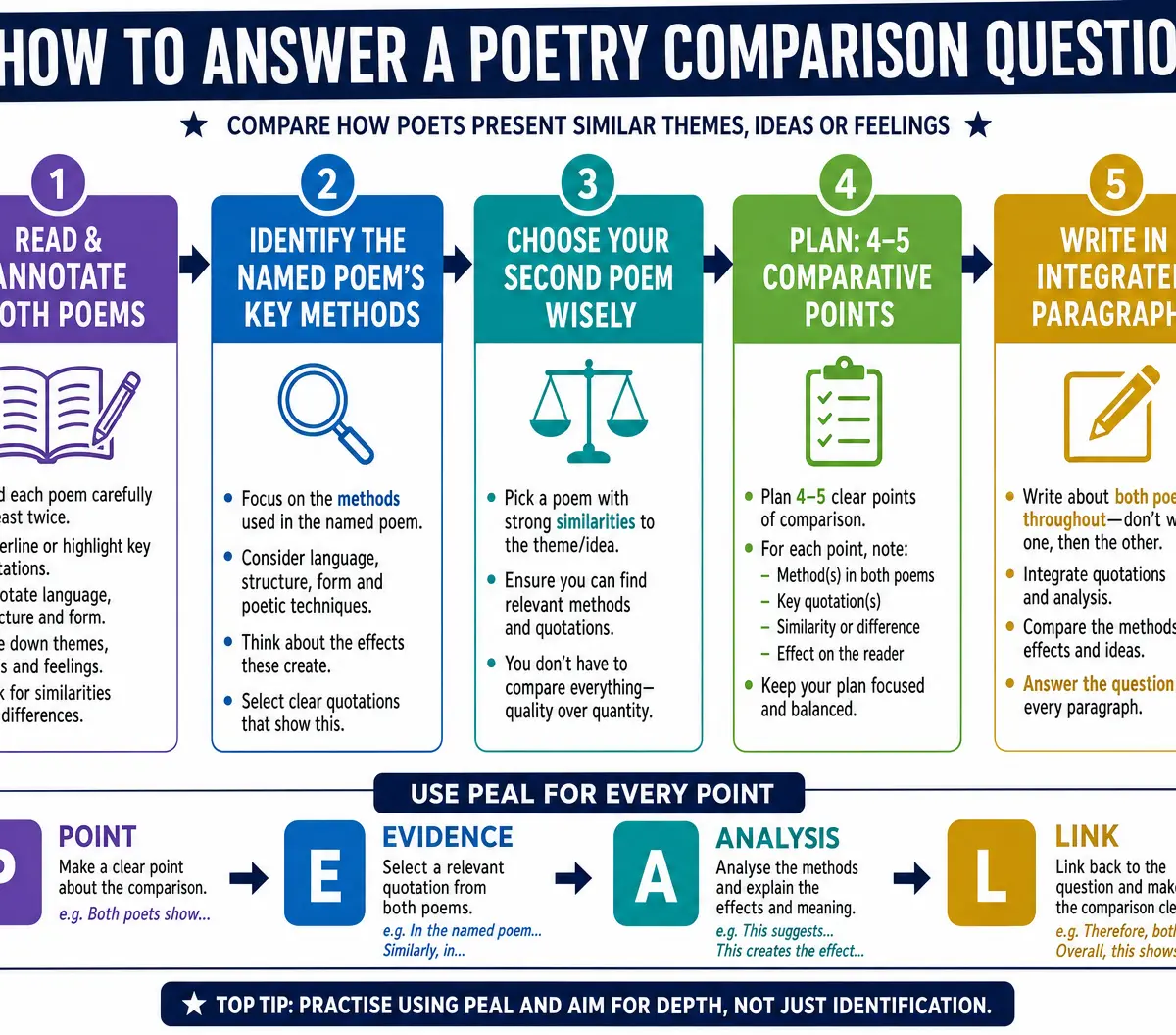
Visual Resources
2 diagrams and illustrations
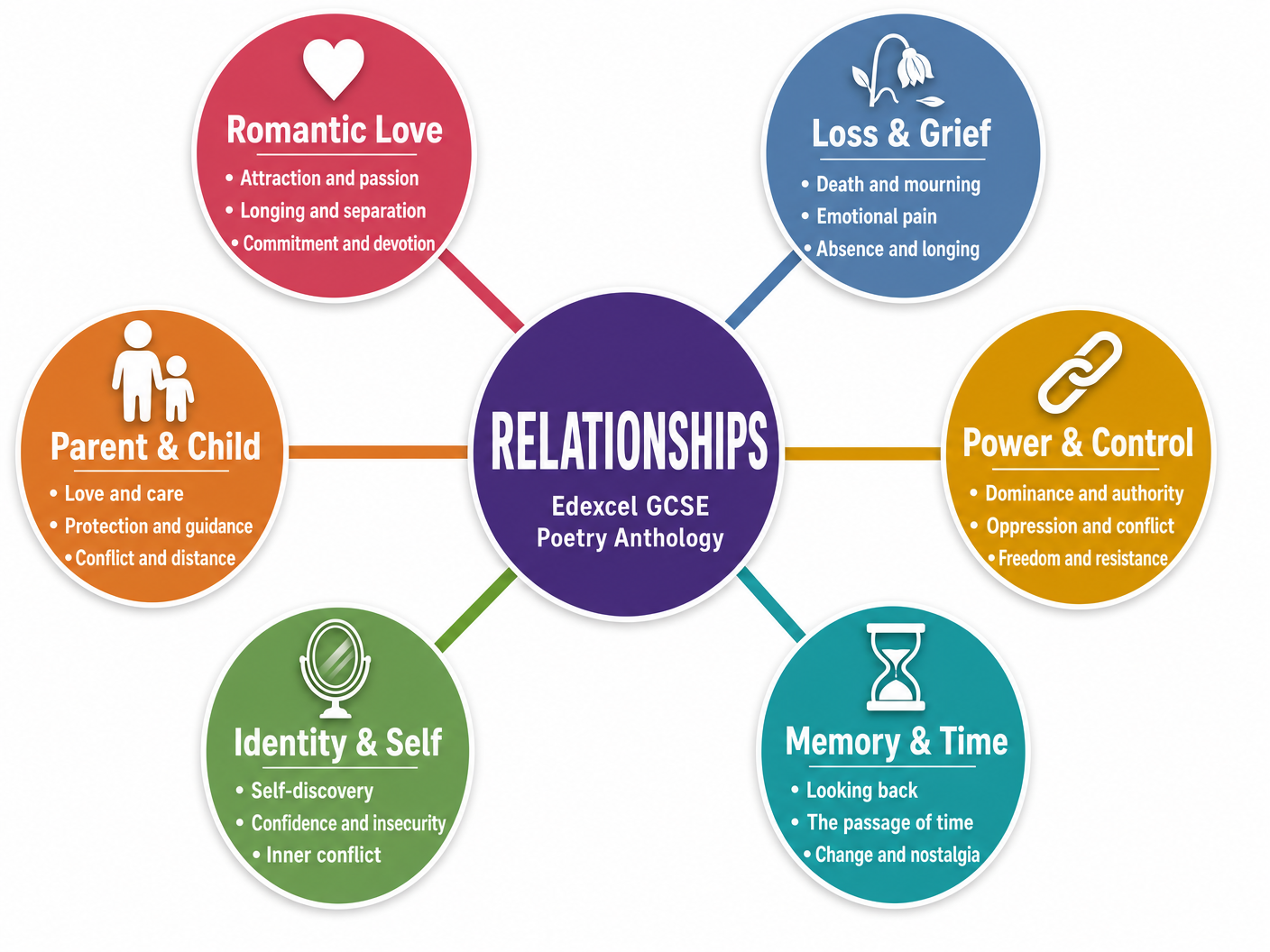
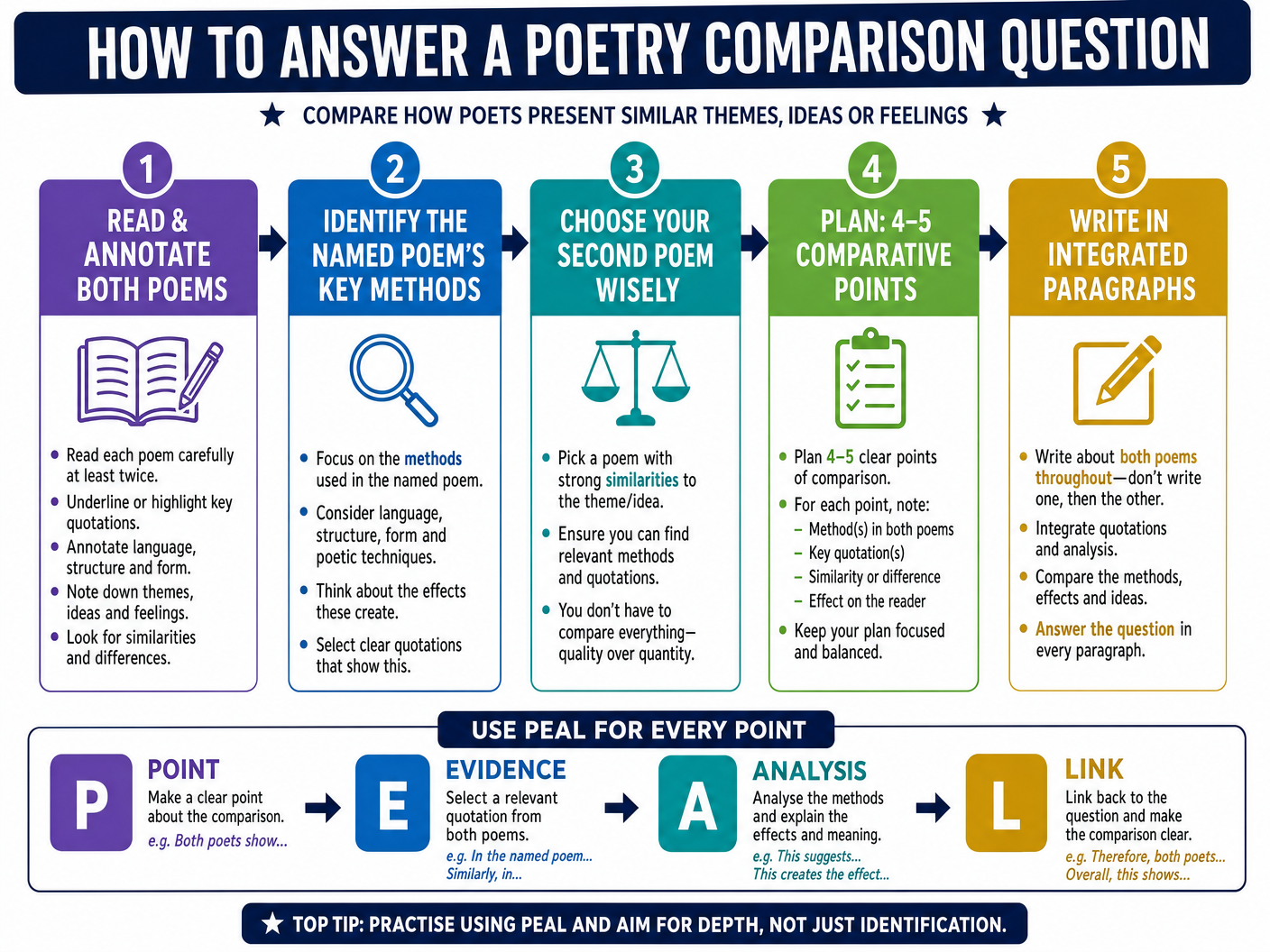
Interactive Diagrams
1 interactive diagram to visualise key concepts
Conceptual Flow Outline
The manifestation of control in 'My Last Duchess'
Worked Examples
1 worked example — open one to explore the question and available guidance.
Practice Questions
Test your understanding — click to reveal model answers
Compare how poets present the power of memory in 'Remember' and one other poem from the Relationships anthology.
Hint: Consider comparing 'Remember' with 'Neutral Tones' or 'When We Two Parted'. Look at how memory is viewed as either a burden or a comfort.